The BMW Artwork Automotive program is celebrating its fiftieth anniversary this 12 months, and its story has been informed many occasions. However when it comes straight from Jochen Neerpasch — the person who based BMW M, created BMW Motorsport, and greenlit the primary BMW Artwork Automotive — the story hits in a different way. We spoke with Jochen Neerpasch earlier this 12 months on the Rolex 24 at Daytona, the place he seemed again at how an concept that started nearly by chance grew into one of the vital well-known intersections of artwork and motorsport.
The First BMW Artwork Automotive Wasn’t Deliberate
For anybody unfamiliar, the BMW Art Car sequence is a group of race automobiles — and sometimes highway automobiles — remodeled into rolling artistic endeavors by a few of the world’s most celebrated up to date artists. These aren’t replicas or studio props. They’re actual machines which have competed in legendary occasions just like the 24 Hours of Le Mans, painted by names similar to Alexander Calder, Roy Lichtenstein, Andy Warhol, Jenny Holzer, David Hockney, Jeff Koons, Esther Mahlangu, Olafur Eliasson, and Julie Mehretu.
For the reason that first one in 1975, every Artwork Automotive has been a singular collaboration between engineering and artistry — a canvas with a prime pace, born for the observe but destined for the museum.
A Telephone Name from Jean Todt

Neerpasch’s model of the origin story isn’t a cultured company pitch. In his phrases, it began as a stroke of probability throughout a time when BMW was restricted in the place it may compete. “It occurred by chance,” he recalled. “At the moment, we couldn’t race in Europe — solely in the US. We wished to race in Le Mans, however we knew it might be powerful.”

Then got here the decision that set issues in movement. Jean Todt — lengthy earlier than his Ferrari and FIA years — reached out to Neerpasch about an uncommon proposal. “He informed me there was an artwork supplier in Paris who had a challenge. He wished to run a automotive within the 24 Hours of Le Mans, painted by an artist. He had already requested ALPINA to do it, however they’d rejected the concept.” The artwork supplier and racing driver was Hervé Poulain.
Most groups might need dismissed it, however Neerpasch noticed one thing extra. “I believed it was a good suggestion — to not go to Le Mans purely as a motorsport occasion, however as an artwork occasion.”
Racing to Put together a Le Mans Entry

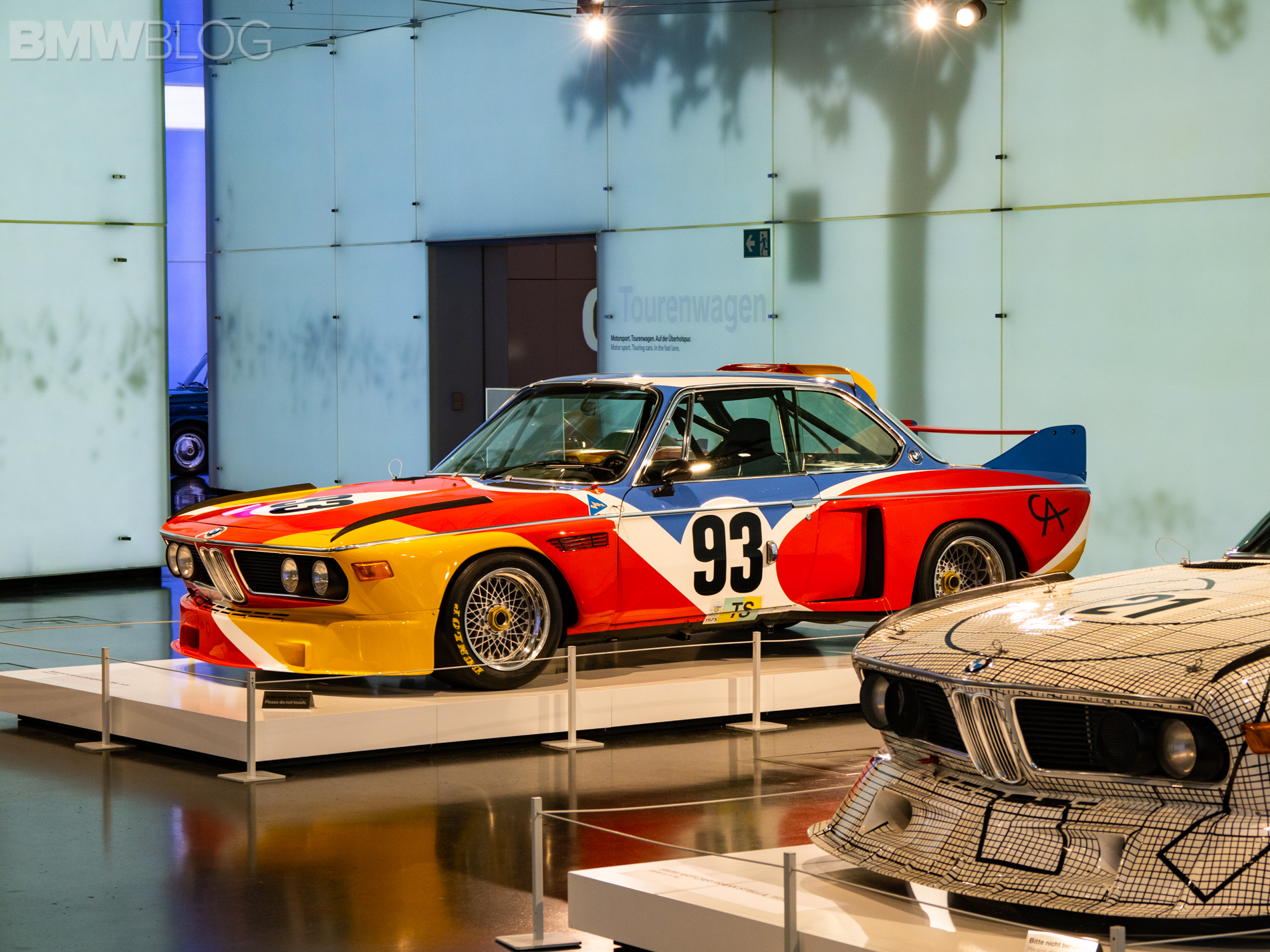
There was one main impediment: BMW’s racing group was primarily based in the US, and there was no crew in Europe prepared to organize a automotive for Le Mans. “However if you wish to, you all the time discover a solution to do it,” Neerpasch stated. That “approach” produced the primary BMW Artwork Automotive — a 3.0 CSL painted by American artist Alexander Calder. Calder’s daring colours and flowing varieties turned the automotive right into a kinetic sculpture, standing out even within the frenetic atmosphere of a 24-hour race.
From One-Off Experiment to Ongoing Legacy

After that debut, Neerpasch knew the idea had potential past a single outing. “After the primary 12 months, we determined to do extra Artwork Automobiles. The concept was to attach the artist not solely to the automotive but additionally to the occasion.” This method produced items like Roy Lichtenstein’s 1977 BMW 320i Group 5, whose sweeping strains and vibrant gradients symbolized the highway, the rising solar, and the expertise of racing by means of the French countryside at daybreak.
It wasn’t about simply portray a automotive — it was about capturing the spirit of endurance racing. And remarkably, not one of the artists took fee. “All of the artists after that didn’t take cash,” Neerpasch stated. “They only wished to do it.”
5 A long time, Twenty Automobiles, Countless Tales

What began with Calder’s CSL now contains 20 BMW Artwork Automobiles spanning minimalism, pop artwork, magical realism, abstraction, idea artwork, and digital artwork. They’ve been displayed in galleries, raced at Le Mans, and toured the world, each representing a singular collaboration between an artist’s imaginative and prescient and BMW’s engineering.
And to assume — all of it started with a telephone name, a rejected proposal, and a motorsport boss who was prepared to take an opportunity on one thing unconventional.
Neerpasch’s story is a reminder that a few of the most enduring legacies in racing don’t begin with a strategic plan. They begin with a “why not?” and the dedication to make it occur.
BMW Artwork Automobiles Timeline (1975–2024)
- 1975 – Alexander Calder (USA) – BMW 3.0 CSL
- 1976 – Frank Stella (USA) – BMW 3.0 CSL
- 1977 – Roy Lichtenstein (USA) – BMW 320i Group 5 Race Model
- 1979 – Andy Warhol (USA) – BMW M1 Group 4 Race Model
- 1982 – Ernst Fuchs (Austria) – BMW 635 CSi
- 1986 – Robert Rauschenberg (USA) – BMW 635 CSi
- 1989 – Michael Jagamara Nelson (Australia) – BMW M3 Group A Race Model
- 1989 – Ken Performed (Australia) – BMW M3 Group A Race Model
- 1990 – Matazo Kayama (Japan) – BMW 535i
- 1990 – César Manrique (Spain) – BMW 730i
- 1991 – A.R. Penck (Germany) – BMW Z1
- 1991 – Esther Mahlangu (South Africa) – BMW 525i
- 1992 – Sandro Chia (Italy) – BMW 3-Sequence Racing Touring Automotive Prototype
- 1995 – David Hockney (Nice Britain) – BMW 850CSi
- 1999 – Jenny Holzer (USA) – BMW V12 LMR
- 2007 – Olafur Eliasson (Denmark) – BMW H2R Hydrogen Document Automotive (Your cell expectations: BMW H2R challenge)
- 2010 – Jeff Koons (USA) – BMW M3 GT2
- 2016 – Cao Fei (China) – BMW M6 GT3
- 2016 – John Baldessari (USA) – BMW M6 GTLM
- 2024 – Julie Mehretu (USA) – BMW M Hybrid V8
Trending Merchandise

Hiseanllo Car Seat Gap Filler 2 Pack, Univers...

Mandark 4PCS Car Cup Holder Coasters, 2.75 In...